
Which pineau should you choose? We give you the keys!
In 1945, Pineau des Charentes became the first liqueur wine to be awarded an AOC (‘Appellation d'Origine Contrôlée’). This Charentais drink, made from grape juice and brandy, has a smooth, fruity character. But there are as many flavours as there are pineaux!
Do you like Pineau des Charentes but don't know which one to choose? There are several criteria to take into account to find the perfect pineau for you. We'll explain everything!
Choosing pineau in relation to grape varieties
Pineau des Charentes is 3/4 grape juice. And there are several types of grape! Several different grape varieties can be used to make pineau.
The first distinction to make is between white pineau, rosé pineau and red pineau. How do you know which one you prefer? Let's focus first on white pineau.
White Pineau des Charentes: grape varieties and aromas
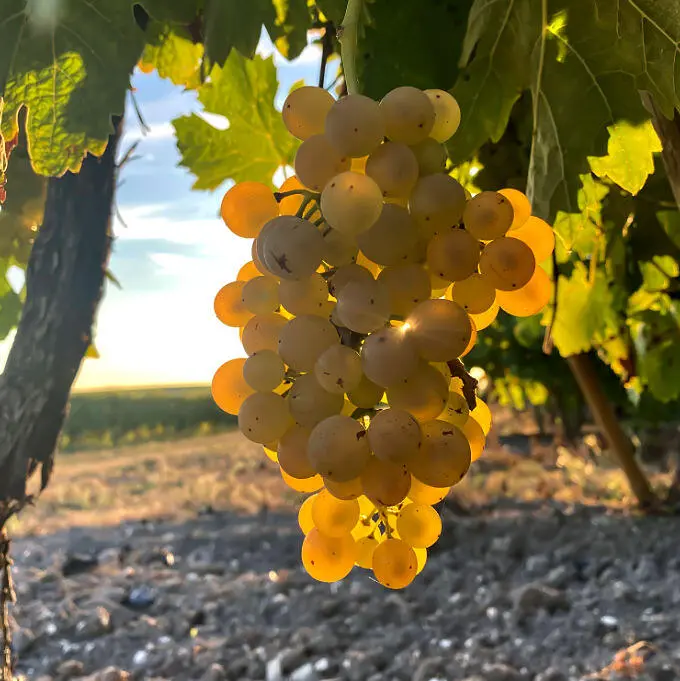
White Pineau is so called because it is made from ‘white’ grape varieties. Several grape varieties can be used. The majority are Ugni blanc, Colombard, Folle Blanche, Sémillon and Sauvignon.
In terms of aroma, these white grape varieties offer notes of white fruit and candied fruit. Then there are the subtleties between grape varieties: Colombard brings a dry, acidic side, while Sémillon is sweeter and greedier. Folle Blanche, meanwhile, offers more floral notes.
Guillon-Painturaud White Pineau
For our pineaux, we have chosen to use Ugni-blanc and Sémillon. We aim for perfect balance and aromatic complexity. As a result, our pineaux are gourmet, fruity drinks with a sweet, syrupy finish.
Now, what about red pineau?
Pineau des Charentes red and rosé: grape varieties and aromas
To produce red or rosé pineau (depending on the maceration time of the grape skins), several grape varieties can be used. These include Carbernet Sauvignon, Cabernet Franc and Merlot. All these varieties are very fruity. On the whole, red or rosé pineau will offer notes of red fruit and a powerful aroma.
Guillon-Painturaud Rosé Pineau
At the estate, we make rosé pineau, which is made from the same grape varieties as the red, but the skins are macerated for less time than for red pineau. This is a rarer type of pineau to find and one in which we find great subtlety. Merlot and Cabernet Franc are the grape varieties we have chosen to use. The result is a very luscious pineau, with notes of red fruit such as strawberry and cherry. An interesting detail is that these notes evolve over time...
Choosing pineau according to age
While the grape variety is the first criteria for choosing a pineau, the ageing time is a second, not insignificant factor. The aromatic notes of a young pineau are not the same as those of an old or extra-old pineau.
The evolution of pineau blanc over time
We will base our work here on our Guillon-Painturaud pineaux (Click here to find out more!). The house's particularity is that it offers old pineaux, so we see the advantage of leaving the pineaux in barrel for longer to let them evolve and offer us ever greater aromatic complexity.
The young white pineau will be very close to the grape, with notes of fresh fruit. Older white Pineau already shows a fine evolution, with more woody and white fruit notes. A very old pineau has notes of candied fruit and grilled almonds. Finally, an even older pineau will have notes of cognac and a very long finish.
The evolution of red and rosé pineau over time
Once again, we are basing ourselves on the rosé pineaux that we offer at the estate.
The young rosé, fresh and light, will be characterised by notes of strawberry and blackberry. With a few more years (old rosé), candied aromas arrive and we can taste prunes in particular. If we then go for an extra vieux pineau rosé, complexity will be present and the pineau will offer a toasty and vanilla side. There are also notes of strawberry jam. Finally, with many more years in oak, the pineau will reveal spicy and cocoa notes, all with impressive length on the palate.
Age is therefore a very interesting criterion to take into account. Especially as pineau tastes differently depending on how long it has been aged!
Choosing pineau based on how it is consumed
To choose your pineau, you can also think in terms of how you want to drink it. Would you like pineau as an aperitif, dessert wine or digestif? Depending on your choice, you won't go for the same pineau!
Pineau for the aperitif
For the aperitif, we prefer fresh, light pineaux. That's why we recommend young or old pineaux (white or rosé, depending on the flavours you prefer!). These pineaux are still full of freshness and offer light, fruity notes that are perfect for whetting your appetite. And when you say aperitif, you also say cocktail! Young pineaux are perfect for this. Discover our pineau cocktail recipes our dedicated article! A little extra: our old white pineau It also goes perfectly with Comté cheese. Cut into small cubes for an aperitif!
Pineau for dessert
Yes, pineau can also be your ally during a meal! To bring out the best in your desserts, we recommend you opt for old or extra-old pineau. The fact that they have more body and aromatic power means that they go well with more intense flavours. The extra-old white can accompany a white fruit tart or crème brûlée, for example. the extra-old rosé goes perfectly with a chocolate dessert!
Pineau for the digestive
This is reserved for pineaux that have aged for a very long time in barrel. Pineaux that have had time to develop highly complex notes approaching those of cognac. Power, length, roundness, everything you need for a gourmet moment after a meal. Our pineaux Exception are perfect for this!
Grape variety, age and drinking style are therefore the 3 most important criteria for choosing the right pineau. There are as many aromatic notes as there are pineau, and these evolve and become more complex over time. You now have all the information you need to make your choice!
To complement this article, we also invite you to read our article "How to drink Pineau des Charentes - you'll find out more about how to drink pineau!