
What is brandy?
Brandy is an English term for wine brandy. It comes from the Dutch word ‘brandewijn’, which means ‘burnt wine’. Brandy is obtained by distilling wine from red or white grape varieties. According to European law, brandy is ‘any spirit drink produced from wine eau-de-vie - obtained from the fermentation of grapes - which has a strength of 36% by volume and is aged for at least 6 months if the capacity of the oak cask is less than 1,000 litres’.
The origin of brandy
We have to go back to the 17th century to find the origin of the term brandy. At a time when the Dutch were trading in wines, they noticed problems with the preservation of the latter during transport. So they started distilling wine to solve the problem. This was the birth of the famous burnt wine.
In the 19th century, after the phylloxera crisis (the aphid that ravaged a large part of the vineyards in the 1870s), brandy took another turn. In 1909, appellations were created to define precise geographical areas for the production of brandy wine. Later, yields began to fall and French brandy producers had to source their brandies from abroad. For a time, the term brandy was used to describe eaux-de-vie made from foreign wines, before regaining its original definition in 1989.
Brandy is now protected by the Brandy Français geographical indication.
Production of brandy
There are no specific regulations governing the distillation of brandy (unlike cognac). Distillation can be carried out in an iron still or a column still, with single or double distillation.
After distillation, the eaux-de-vie must be aged for a minimum of 12 months in oak casks of at least 1,000 litres or 6 months in casks of less than 1,000 litres.
The brandy must be at least 36% by volume.
What makes cognac different from brandy?
The cognac is in fact a type of brandy. It is much more strictly regulated and must meet a number of requirements that also contribute to the quality of this product.
The cognac appellation zone
Cognac is a type of brandy produced in a very limited area. These are the different crus of cognac. These include Grande Champagne, Petite Champagne, Borderies, Fins Bois, Bons Bois and Bois Ordinaires. Together, these crus cover an area of around 32,000 hectares stretching from the south of the Charente to the Deux Sèvres. Outside this area, the product can no longer be called cognac, and is therefore called brandy.
Cognac grape varieties
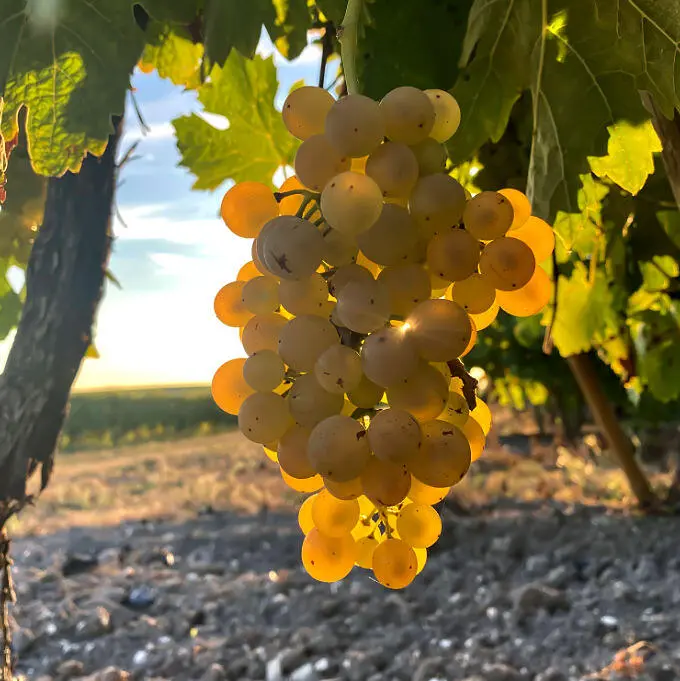
In contrast to brandy, which can be made from red or white grape varieties, cognac must be made from white grape varieties only. The grape varieties used are Ugni-blanc (98%) and Folle Blanche. These grapes produce wines whose acidity is ideal for distillation, as it brings out the full aromatic potential of the eaux-de-vie.
The distillation and ageing of cognac
To distil the wines that will become cognacs, there are precise rules to follow. The distillery must be a double distillationand this in a Charentais iron still. This double distillation concentrates the aromas and produces very fine, delicate eaux-de-vie.
As for ageing, cognac must be aged for a minimum of 2 years in oak casks, whereas brandy must be aged for a minimum of 6 months. Cognac eaux-de-vie aged a minimum of 2 years are then blended to create the final product.
Cognac must contain a minimum of 40 degrees of alcohol, otherwise it can no longer be called cognac.
So these two spirits, although very similar, have very distinct characteristics and are two products in their own right.
Would you like to discover our 100% Grande Champagne cognacs? Visit our online shop.