
The Charentais still: the beating heart of Cognac
If one had to choose a universal symbol for Cognac, it would undoubtedly be the charentais still. With its copper curves and swan neck, it embodies both a centuries-old artisanal heritage and a craftsmanship that is still alive today. Without it, it would be impossible to produce the eaux-de-vie that will become Cognac.
But what exactly is a Charentais still? How does it work? What is its history, and why is it still essential to Cognac's global reputation today?
At Guillon Painturaud, a family business located in Grande Champagne, we continue to work each distillation season with our stills, perpetuating an ancestral ritual that shapes the identity of our cognacs.
What is a Charentais still?
A still is a distillation device used to separate the components of a liquid by heating and condensation.
Thecharentais still, in particular, is the specific and regulated model used to produce Cognac.
It consists of three main elements:
-
the boiler (or cucurbit) where white wine is heated,
-
the marquee extended by a swan neck, which guides the alcohol vapors,
-
the coil, immersed in a cooling basin, where the vapors condense into liquid.
Its distinctive feature lies in the distillation method known as “à repasse” or double distillation.
The history of the Charentais still: from Dutch merchants to Cognac
Although distillation has been known since ancient times (the Mesopotamians already used it for perfumes and essences), it was in the Middle Age that the still was perfected, particularly thanks to Arab alchemists.
In Charente, its specific use for wine appeared in 16th century. The Dutch merchants, wine exporters, were looking for a way to stabilize the product during long sea voyages. By heating the wine in a still, they obtained a more concentrated brandy, which they called brandewijn (“burnt wine”), origin of the word brandy.
This gradually gave rise to the practice of double distillation, which would produce Cognac. Over the centuries, the Charentais still became the centerpiece of this tradition.
Handcrafted still production: the expertise of boilermakers
Unlike other industrial devices, the Charentais still is always handcrafted from copper by specialized boilermakers.
Why copper?
-
Excellent thermal conductivity: it heats up quickly and evenly.
-
Beneficial chemical reaction: it binds sulfur compounds and impurities, resulting in purer spirits.
-
Malleability: it can be hammered and shaped by hand to optimize volumes.
Each piece is shaped, hammered, polished, and then assembled. The coppersmiths pass this expertise down from generation to generation, perpetuating a rare art.
Charente distillation: alchemy in two heatings
The Charentais still operates on the principle of double distillation :
The first heating: the brouillis
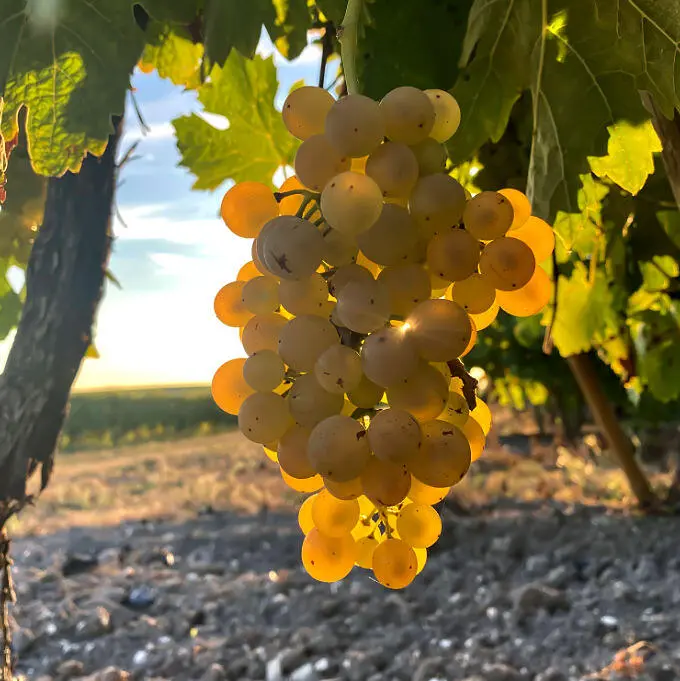
Charente white wine (mainly made from Ugni Blanc grapes) is brought to a boil. The vapors condense to form a cloudy liquid called brouillis, with an alcohol content of approximately 28 to 32%.
The second heating: the “good heating”
The brouillis is distilled a second time. The master distiller then separates the "heads" (too high in alcohol), the "heart" (the noble part that will become Cognac), and the "tails" (less aromatic).
Only the heart, clear and pure, is preserved. It has an alcohol content of between 70 and 72%.
👉 It is precision work that requires detailed knowledge of the raw material and keen sensory awareness.
Rules and regulations governing Charentais stills
TheINAO (National Institute for Origin and Quality) strictly regulates the use of the Charentais still.
-
La capacité de la chaudière pour la bonne chauffe est limitée à 25 hectolitres
-
The materials must be made of copper.
-
Distillation must ends before the 31 of March following the harvest.
These rules guarantee respect for tradition and the quality of the spirits produced.
Charentais stills vs. other stills: what are the differences?
There are many types of stills around the world: column stills, Scotch whisky stills, Portuguese stills (alambique).
But the Charente still is distinguished by:
-
its double distillation,
-
the aromatic finesse achieved,
-
a deliberate slowness that allows for greater concentration of flavors.
Where other spirits sometimes require three or four passes to achieve equivalent purity, Cognac requires only two.
The Charente still at Guillon-Painturaud: family tradition and excellence
In our family estate of Grande Champagne, the still is not just a machine: it is the beating heart of the house.
Every winter, when distillation begins, the air is filled with the scent of mulled wine and copper. The nights are long, because distillation is a continuous process that never stops, day or night.
We carefully monitor every drop, adjusting the heat, tasting the distillate, selecting the heart of the distillation. This unchanging ritual, passed down from generation to generation, shapes the identity of our Cognacs: finesse, elegance, and aromatic depth.
The aromas revealed by the Charentais still
The work of the still directly influences the taste profile of Cognac:
-
floral freshness (lime blossom, grapevine blossom, jasmine),
-
fruity flavors (peach, pear, apricot),
-
elegance and length on the palate.
These aromas, still raw after distillation, will then be refined through contact with oak during the aging stage.
The future of the Charente still: tradition and modernity
Although centuries old, the Charente still remains relevant today. Distilleries and distillers are experimenting:
-
gentler heating,
-
subtle condensation settings,
-
sometimes even in combination with digital tracking tools.
But ultimately, the essence remains: Charentais distillation is still a human's job, requiring patience and instinct.
Conclusion
Thecharentais still is much more than a tool: it is a living heritage, the guardian of Cognac's quality and identity. Heir to a long history and the result of unique craftsmanship, it continues to transform Charente white wine into an exceptional brandy every year.
At Guillon Painturaud, family estate of Grande Champagne, we remain faithful to him, convinced that it is in his copper vats that the soul of our cognacs is born.
FAQ about the Charentais still
❓ What is a Charentais still?
A specific copper still used to produce Cognac using the double distillation method.
❓ How does double distillation work in a Charentais still?
The first distillation transforms the white wine into “brouillis” (27 to 32% ABV). The second distillation, known as “good heating,” extracts only the heart of the distillate, producing a spirit between 70 and 72% ABV, which is then aged in oak barrels.
❓ What is the difference between a still and a Charentais still?
The still is a generic distillation apparatus. The Charentais still is a specific, regulated version used exclusively for Cognac.
❓ Why is copper used for stills?
Because it conducts heat perfectly, traps impurities, and improves the aromatic quality of the brandy.
❓ Is the Charentais still made by hand?
Yes, it is designed by specialist boilermakers, perpetuating expertise that has been passed down for centuries.
❓ Can we visit a Charentais still at Guillon-Painturaud?
Yes, our family estate in Grande Champagne offers winery and distillery tours, where you can see the Charentais still in operation and taste our cognacs and pineaux.