
Distilling with lees: an aromatic enrichment method for cognac
In cognac production, “distillation with lees” is a traditional and emblematic technique. It consists of distilling the wine without having clarified it completely, i.e. retaining the lees, the deposits naturally present after fermentation. This method is favored by many independent cognac producers, because it adds a unique aromatic depth to eaux-de-vie. In this article, we explore in detail what distillation with lees is, its advantages, and its impact on the final product.
What is “distillation with lees”?
La distillation avec des lies fait référence à un processus où le vin utilisé pour la distillation n’est pas totalement filtré de ses sédiments fermentaires, appelés “lies”. Les lies sont principalement constituées de cellules de levures mortes, de micro-particules de raisin et d’autres résidus issus de la fermentation. Elles se déposent naturellement au fond des cuves après cette première phase. Dans la distillation classique, le vin est souvent clarifié pour retirer ces lies, mais dans la méthode de distillation avec des lies, elles sont conservées et passent donc dans our charentais still. This approach makes it possible to integrate the aromatic compounds contained in the lees directly into the distillate, enriching the aromatic profile of our eaux-de-vie.
The advantages of distillation with lees
- Complexity and aromatic richness : The lees bring a unique intensity and complexity to the aromas. They allow us to obtain more pronounced notes of dried fruit, flowers, and even buttery or brioche aromas that are unattainable with conventional distillation.
- Texture enhancement : The lees also influence the texture of the cognac. Eau-de-vie distilled with lees is rounder and fuller on the palate, with a longer finish.
- A natural, authentic process : For us, as part of our commitment to preserving artisanal know-how, distillation with lees is a way of respecting traditions and expressing the authenticity of the terroir. Each batch distilled with lees is unique, and transmits an organoleptic imprint representative of the soil and climate.
The distillation process with lees
The process of distillation with lees follows several specific steps:
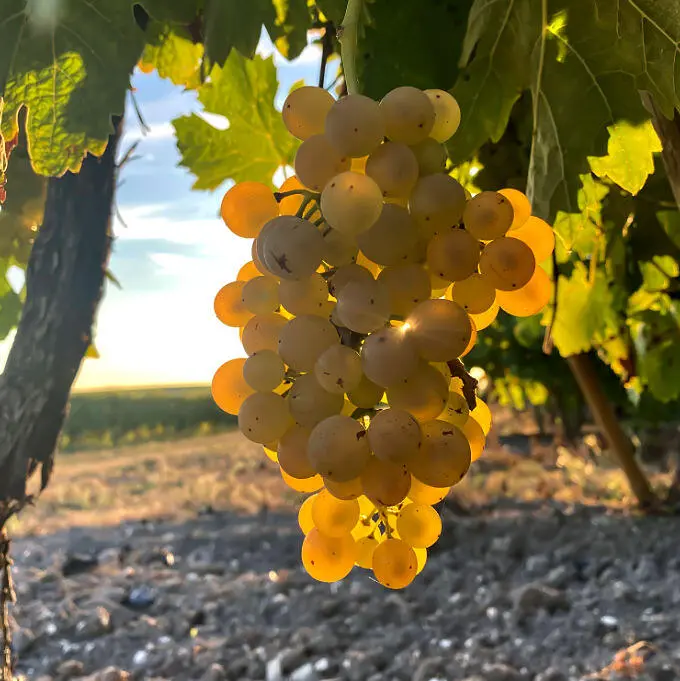
- Wine selection and fermentation : The choice of grape varieties, often ugni blanc for cognac, is crucial, as are the fermentation conditions that produce the lees. These are what give the cognac its distinctive aromas.
- Still load : Once fermentation is complete, the wine and its lees are fed directly into the still. The Charentais still, used in the Cognac region, is particularly well-suited to this method, as it allows slow distillation, essential for gently extracting the aromas from the lees.
- First heating : During this stage, wine vapors rise in the alembic and are cooled to obtain the brouillis, a first distillate with low alcohol content.
- Good heating and cuttings : The brouillis is redistilled to further concentrate the aromas. Elise, the master distiller, then carries out rigorous cuts to eliminate the “heads” (the most volatile fractions) and the “tails” (the heaviest fractions), leaving only the heart of the toast, the very heart of the eau-de-vie.
Impact of distillation with lees on cognac ageing
Cognac distilled with lees often has a higher ageing potential. The richness of the aromatic compounds develops and refines on contact with the wood in the oak barrels, giving rise to cognacs of great depth and complexity after several years. Over time, the notes brought by the lees, such as aromas of ripe fruit, spices and sometimes even toasted notes, blend harmoniously with the wood's tannins.
Distilling with lees: a strategic choice for independent producers
For independent producers, choosing to distill with lees is often a strategic choice that allows them to stand out in an increasingly competitive market. This method, although more demanding, is a mark of quality and know-how that enhances the unique identity of each producer. By preserving the lees, we can create authentic, more robust cognacs with a unique personality.
Distillation with lees and durability
Beyond the taste aspects, distilling with lees also contributes to sustainability. By integrating lees into the process, clarification and filtration steps are reduced, minimizing intervention and inputs. This practice is thus part of environmentally-friendly viticulture, a strong trend among today's producers and consumers.
Conclusion: Why distill with lees?
Distillation with lees is much more than a simple technique; it's a subtle art that requires special know-how and a commitment to quality. For cognac lovers, eaux-de-vie produced using this method offer a rich, intense and unique sensory experience. By choosing to distill with lees, we give our cognac fabulous roundness and complexity on the palate.